This proposal presents a straightforward business case for transitioning telecom base stations to solar-hybrid power systems. The analysis draws on operational data from actual hybrid installations deployed across sub-Saharan Africa and Southeast Asia between 2022 and 2026. With telecom infrastructure consuming over 1% of global electricity, operators are feeling the pressure from rising energy costs, unreliable grids, and stricter environmental regulations.
The numbers tell a compelling story. A 2025 optimization study published in ScienceDirect confirmed that hybrid solar-PV, battery, and diesel generator systems can achieve 100% power availability with a Levelized Cost of Energy (LCOE) between $0.047 and $0.060/kWh. That sits well below the typical grid tariff of $0.087/kWh. The financial case is clear, but the operational benefits are equally important.
What makes this work in practice
Before looking at costs and savings, it is worth understanding how these systems actually perform in the field. A 2025 project covering 400 sites across Nigeria and Cameroon demonstrated what is possible. The hybrid installations reduced diesel running hours from 15.6 to just 2.8 hours per day. That is an 82% reduction in fuel consumption. For a network of that size, the fuel savings alone covered a significant portion of the capital investment within the first two years.
Another 2026 study examining PV integration across South African telecom sites found a 22.37% reduction in grid consumption, with sites achieving a self-sufficiency rate of 23.73%. For operators facing regular load shedding, these numbers translate directly to fewer dropped calls and happier subscribers.
From an environmental standpoint, transitioning 400 sites to solar reduces CO₂ emissions by an estimated 3,500 to 5,000 tons annually. That is not just good for the planet; it helps operators meet their ESG targets and stay ahead of carbon taxes.
What the system looks like
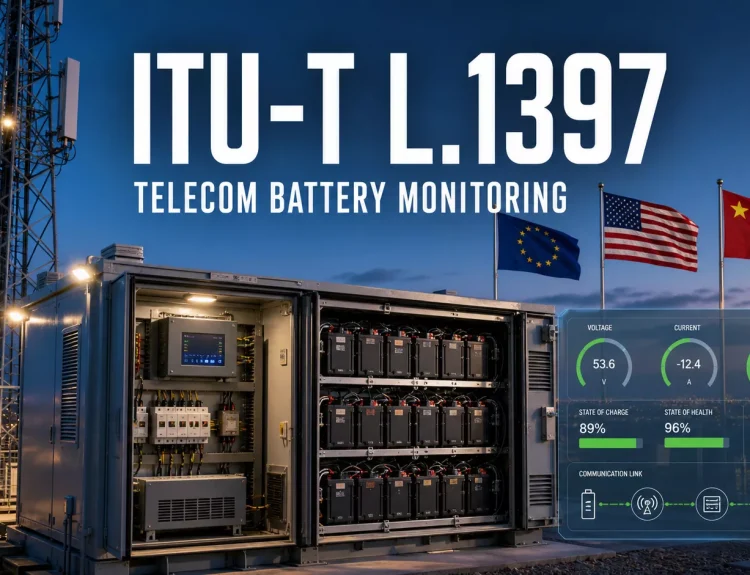
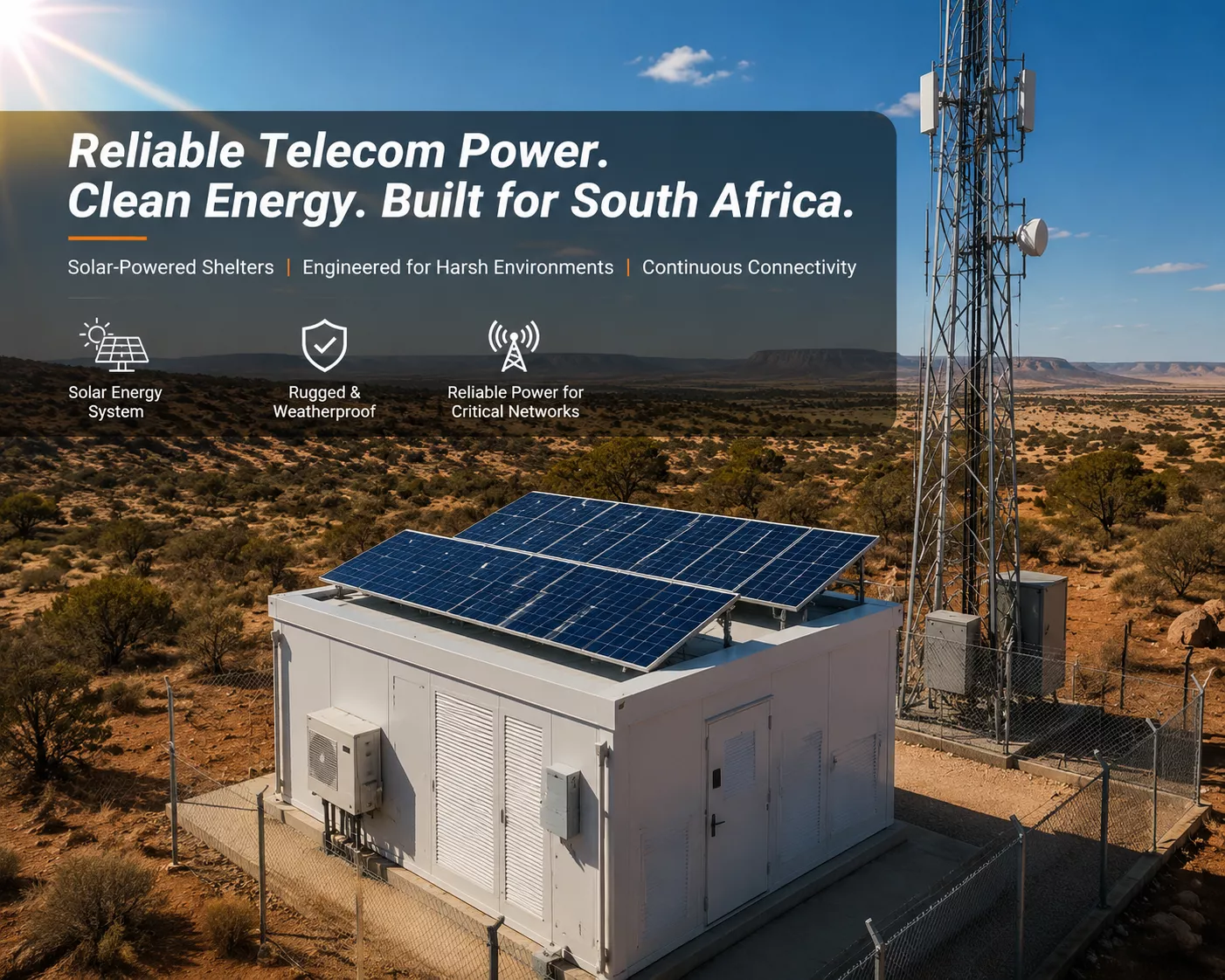
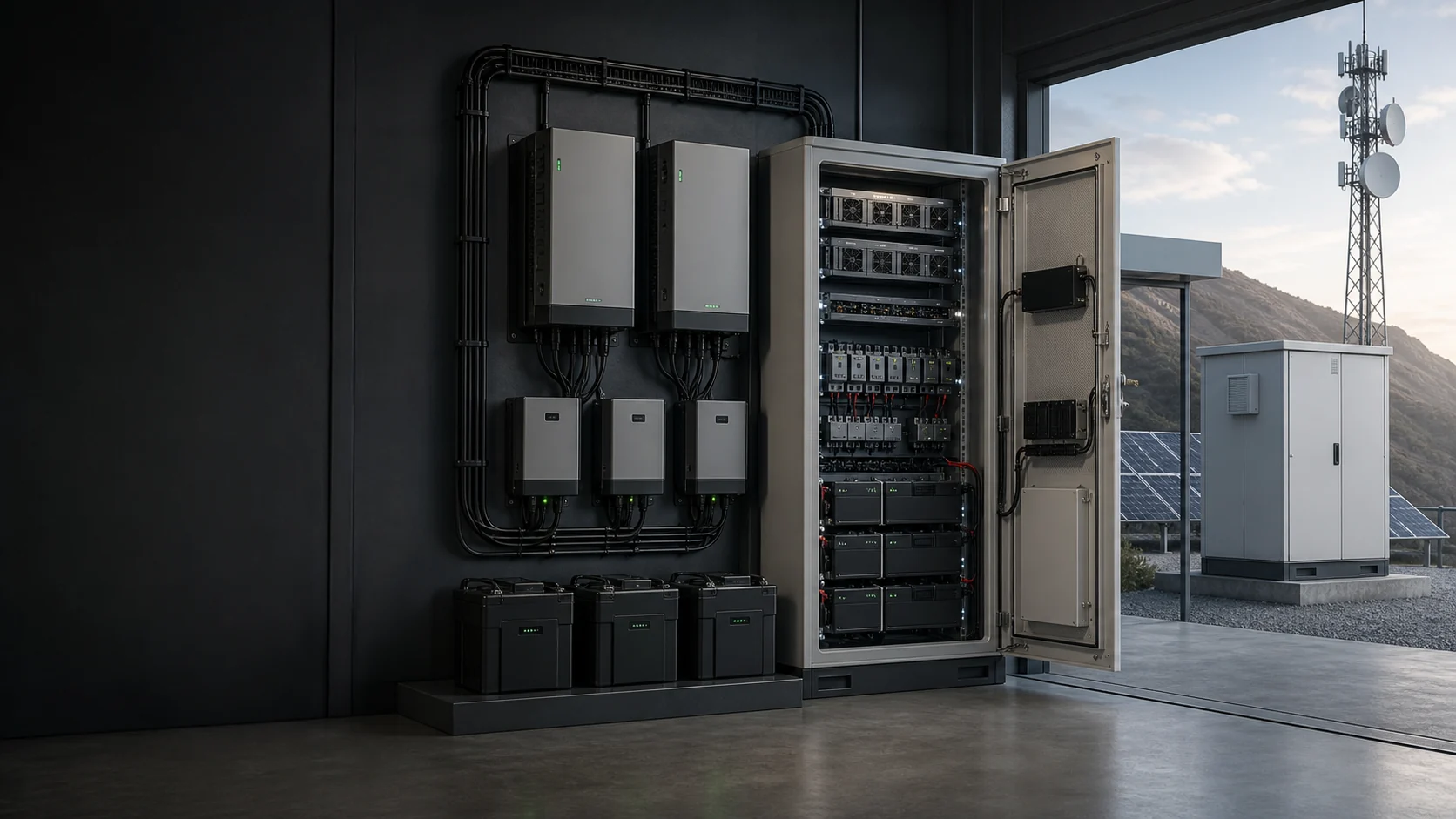
A typical installation combines several components into a single, coordinated system. The solar array uses high-efficiency monocrystalline modules, preferably N-type TOPCon or HJT, sized according to the site load profile and local irradiance data. Battery storage is usually LiFePO4 chemistry, offering usable depth of discharge between 80% and 90% and cycle life exceeding 6,000 cycles at 25°C. Power conversion involves MPPT controllers, hybrid inverters, and -48V DC rectifiers to integrate seamlessly with existing telecom infrastructure. The existing diesel generator stays in place for emergency backup during extended periods of low sunlight. An Energy Management System ties everything together with real-time monitoring, dispatch optimization, and remote alarms.
System sizing follows a workflow that has been validated on live sites over several years. It starts with 15-minute interval load logging over 30 days to establish average and peak demand. Solar resource modeling uses NASA SSE or Solargis data for the specific site coordinates. Battery capacity is then calculated as average critical load multiplied by required backup hours divided by depth of discharge.
The table below gives a rough guide to sizing for different site types:
| Site Type | Average Load | Battery Autonomy | PV Capacity | Battery Capacity |
|---|---|---|---|---|
| Small urban site | 1–3 kW | 4–8 hours | 5–10 kWp | 10–25 kWh |
| LTE/5G macro site | 3–6 kW | 8–12 hours | 10–20 kWp | 25–75 kWh |
| High-load hub or weak-grid site | 6–10 kW | 24–48 hours | 20–40 kWp | 150–400 kWh |
Source: Highjoule Telecom Solar Installation Guide; The Solar Telecom project database (2022–2026)
All system components should comply with relevant international standards. PV modules need to meet IEC 61215 and IEC 61730. Battery systems should comply with IEC 62619 for safety. At the telecom level, ITU-T L.1380 provides guidance on energy efficiency and renewable integration. EMC and safety standards include EN 61000-6-2 and EN 61000-6-3.
What it costs and what it saves
Capital investment varies by site, but based on 2025 and 2026 supplier pricing and South African import tariffs, a typical 20 kWp installation breaks down as follows: PV modules cost between $8,000 and $12,000; battery storage around 75 kWh runs $12,000 to $18,000; power electronics including inverters and MPPT controllers are $4,000 to $6,000; the EMS and monitoring system adds $2,000 to $3,500; mounting and cabling work comes to $2,500 to $4,000; and installation and commissioning takes $4,000 to $7,000. These figures are indicative and depend on site conditions and volume discounts.
On the savings side, the numbers are substantial. The 82% diesel reduction mentioned earlier translates directly to lower fuel spend. Generator maintenance intervals extend from 250 to 1,000 hours, cutting repair and logistics costs by an estimated 60%. Grid consumption drops by over 22%, based on the South African field data.
The hybrid system achieves an LCOE of $0.047 to $0.060/kWh, comfortably below the typical grid tariff of $0.087/kWh. When compared to diesel generation at $1.20 to $1.50 per liter in remote areas, the margin is even wider.
Payback periods typically fall between 4.5 and 6.5 years, depending on site load and diesel displacement. Over a 10-year project life, net savings per site after CAPEX recovery range from $70,000 to $120,000. The internal rate of return sits between 18% and 25%.
How to roll this out
A phased implementation approach works best, starting with a pilot group of 5 to 10 representative sites before scaling across the network.
Phase 1: Site survey and feasibility (weeks 1 to 3) involves logging load profiles at 15-minute intervals, assessing solar irradiance using satellite data, evaluating structural integrity for mounting, and identifying permitting requirements. The output is a feasibility report with initial system sizing.
Phase 2: System design and procurement (weeks 4 to 7) covers detailed engineering design, including single-line diagrams and bill of materials, followed by component procurement to IEC and ITU standards. The deliverables are an approved design pack and purchase orders.
Phase 3: Installation and commissioning (weeks 8 to 12) includes installing solar arrays, battery banks, and power electronics, performing factory acceptance testing, and completing on-site installation and system commissioning. The milestone is a commissioned system with SAT sign-off.
Phase 4: Operations and maintenance (ongoing) involves preventive maintenance schedules covering panel cleaning and battery health checks, with performance monitored via the EMS dashboard. The key performance indicators are 100% availability and diesel runtime under 3 hours per day.
Risks and how to handle them
Every project comes with risks, but they can be managed. Solar resource variability is a medium risk with moderate impact, addressed through battery oversizing at 1.2 times autonomy and retaining diesel backup. Shading or structural constraints are also medium risk, mitigated by detailed surveys, high-efficiency modules, and alternative mounting options like tower or ground installations. Regulatory changes are low risk but could affect compliance costs, so early engagement with authorities and modular design are sensible precautions. Technology obsolescence is low risk, managed by selecting scalable, modular systems with field-upgradeable firmware. Component failure is low risk but could cause downtime, so warranties of 10 years or more on PV and 5 years on batteries, plus a spare parts kit, provide protection.
Why now
The evidence from field deployments across sub-Saharan Africa is consistent and compelling. Solar-hybrid power systems for telecom base stations are technically proven and financially viable. They deliver 100% power availability at an LCOE below grid tariffs. They cut diesel consumption by over 80%, significantly reducing operating costs. And they help operators meet ESG targets through meaningful carbon footprint reduction.
A pilot program at selected sites would provide network-specific validation and build confidence for broader rollout. The technology is ready, the business case is solid, and the operational benefits are measurable.
About the authors
This proposal was prepared by the technical team at The Solar Telecom. We have been designing and deploying solar, battery, and hybrid power systems for telecom infrastructure since 2010. Our team has delivered projects for operators including Airtel, MTN, Telkom, and multiple TowerCos across 150 countries. We handle everything from site assessment through to commissioning and ongoing maintenance.
Disclaimer: This proposal is intended for informational and planning purposes. Financial projections are based on 2025 and 2026 market conditions and field data. Final system design, pricing, and ROI modeling require site-specific data and professional engineering validation. Regulatory references are current as of the date above; please confirm with relevant authorities before proceeding with implementation.